Luxury Watch Market Value and Trends
A $45–80B market where Swiss precision meets investment-grade demand. How the pre-owned boom, ultra-luxury tier growth, and direct-to-consumer shifts are reshaping horology — and why tokenized ownership of rare timepieces could be the next chapter.
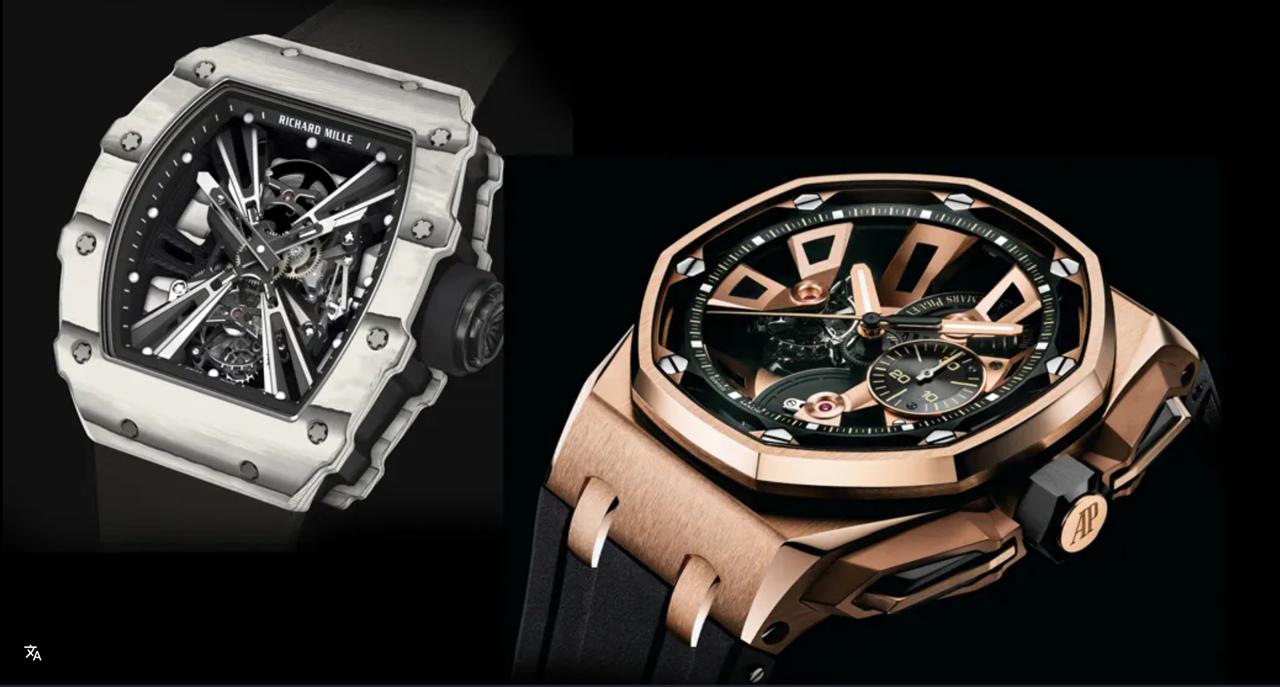
The global luxury watch market is one of the most fascinating and contradictory asset classes in the consumer world. Depending on how strictly you define "luxury" — whether you include entry-level premium pieces or focus exclusively on high-end mechanical timepieces — major research firms value the annual market between $45 billion and $80 billion USD. That is a wide range, but even the conservative end places watches alongside private aviation and online gambling as one of the largest discretionary markets on Earth.
What makes watches particularly interesting for tokenization is that they sit at an unusual intersection: they are physical, serialized, brand-obsessed, historically appreciating, and already traded on a vibrant secondary market. A Patek Philippe or Rolex is not just a timepiece — it is a bearer asset with a thirty-year track record of price appreciation that rivals many equity indices. And unlike gold bars, each watch has a unique identity: model, reference number, movement caliber, production year, and provenance.
1. The numbers: how research firms see the market
No two analysts agree on the exact size, but the directional trend is unanimous: steady growth driven by collector demand, Asian wealth accumulation, and the structural shift from speculative post-pandemic buying to long-term holding. Here is how the major firms stack up:
- Fortune Business Insights: $57.8B (2025), projecting $119.5B by 2034 at ~8.5% CAGR — the most bullish long-term view.
- SNS Insider: $64.8B (2025), projecting $112.4B by 2035 at ~5.7% CAGR — a mid-range estimate anchored in Swiss export data.
- Mordor Intelligence: $79.9B (2025), projecting $114.2B by 2031 at ~6.1% CAGR — the largest current valuation, including broader premium segments.
- Persistence Market Research: $45.0B (2025), projecting $61.2B by 2032 at ~4.5% CAGR — the most conservative, focusing on strict high-end mechanical watches only.
The Swiss benchmark adds crucial context. The Federation of the Swiss Watch Industry (FH) reports annual Swiss watch exports holding steady around CHF 26 billion (roughly $27 billion USD). But this is wholesale export value — the retail footprint is multiples larger once you add markups, distribution, and the massive pre-owned market that Swiss export statistics do not capture.
2. The pre-owned boom: a $17–24B market of its own
The secondary luxury watch market is no longer a fringe activity for collectors — it is a major economic force. Independently valued at over $17 billion to $24 billion annually, pre-owned watch sales are projected to cross $35 billion by 2030. Platforms like Chrono24, Watchfinder, and even eBay's authenticity-guaranteed listings have professionalized what was once a handshake-and-forum business.
This matters enormously for tokenization. The pre-owned market already proves that watches are liquid, tradeable assets with established price discovery. What it lacks is standardization: every sale requires manual authentication, condition grading, and trust intermediation. A tokenized watch with a digital twin recording every service, every previous owner, and every authentication event collapses that friction into a single on-chain record.
3. The ultra-luxury shift: why $25,000+ is the growth tier
The fastest-growing segment is the ultra-high-end tier — watches priced over $25,000 USD. Brands like Rolex, Patek Philippe, and Audemars Piguet have seen waitlists stretch years for certain references, with secondary market premiums routinely exceeding 200–300% of retail. Rarity, heritage, and alternative-investment appeal have turned these pieces into status assets that happen to tell time.
- Unlike equities, ultra-luxury watches have no correlation with traditional markets — they appreciated through the 2022 tech correction and the 2023 banking volatility.
- Unlike art, they are highly portable, insurable, and globally recognized — a Rolex Submariner is liquid in Tokyo, Dubai, or New York with minimal price variation.
- Unlike real estate, they require no maintenance beyond periodic service and can be stored in a safe deposit box or vault for decades.
4. Geography and the direct-to-consumer shift
Asia-Pacific (led by China and Japan) and Europe consistently vie for the largest market share, each controlling roughly 30% to 40%of global revenue. North America, primarily the United States, follows closely as a major hub driven by a dense population of high-net-worth individuals.
Meanwhile, the traditional retail model is being disrupted. For decades, luxury brands relied on authorized dealers and brick-and-mortar boutiques. Now, direct-to-consumer channels — brand-owned online stores and physical showrooms — are capturing more margin and more customer data. Online transactions now account for roughly 10% to 15% of premium watch sales, a figure that sounded implausible just five years ago. That shift creates an opening: a generation of buyers comfortable purchasing a $50,000 watch online will be equally comfortable holding a tokenized share of one.
Why this matters for tokenization
Luxury watches share almost every characteristic that makes gold ideal for tokenization: they are scarce, durable, globally recognized, stored in secure vaults, and already bought and sold as investment assets. But they add something gold cannot offer: individual identity. Every watch has a serial number, a service history, and a provenance chain. Tokenization makes all of that transparent, immutable, and shareable:
- On-chain provenance. From the original purchase receipt through every service record, previous sale, and condition report — all permanently recorded. Counterfeiting and "Frankenwatch" assembly become detectable at the smart-contract layer.
- Fractional ownership of rare references. A limited-edition Patek Philippe 5711 or a vintage Rolex Daytona can cost more than a suburban home. Tokenization allows multiple collectors to own fractional shares, unlocking exposure to appreciation without the seven-figure capital commitment.
- Liquid secondary market, 24/7. Today's pre-owned market depends on consignment dealers, auction houses, and peer-to-peer forums with high fees and slow settlement. An on-chain marketplace enables instant transfers with embedded authenticity guarantees.
- Yield from lending and exhibitions. Museums, brand exhibitions, and even film productions regularly borrow rare watches for display. Token holders can earn rental income from these placements — turning a static collectible into a productive asset, using the same yield mechanics DigiGold already deploys for vaulted gold.
The same rails that prove every gram of gold in our vaults can prove every service event, every previous owner, and every authentication moment for a tokenized timepiece. DigiGold's infrastructure — audited custody, on-chain proof of reserves, and fractional issuance — was designed for any physical asset where transparency and shared ownership unlock value. In a market where a single watch can appreciate more than a retirement portfolio, horology is not just the next frontier. It may be the most natural one yet.
Interested in tokenized real-world assets?
DigiGold makes it simple to own, trade, and redeem physical gold — with more asset classes coming soon.